
Solar CCTV for Farmers — Monitor Your Farm from Anywhere, Zero Maintenance
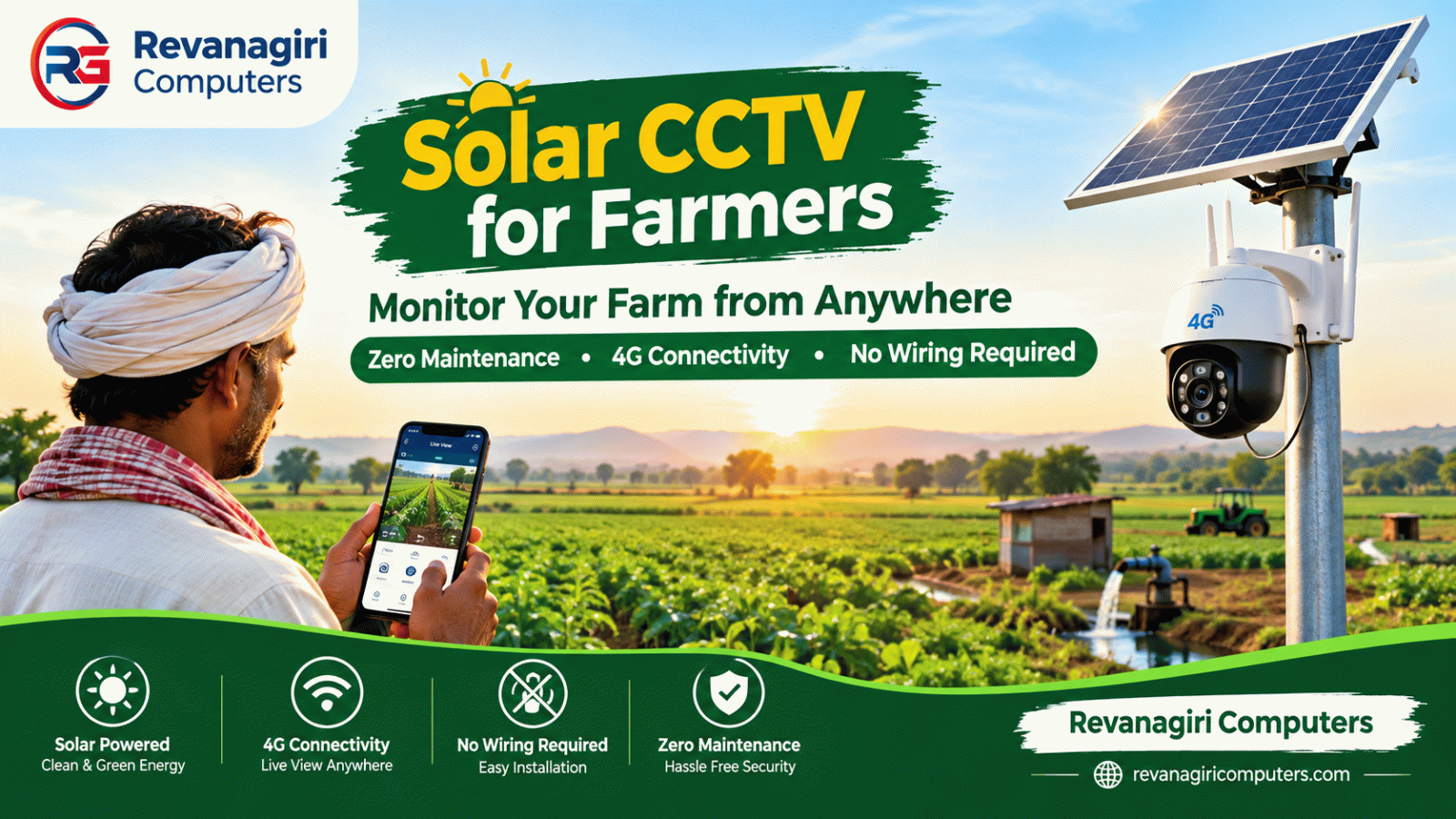
Farming has always demanded constant attention — watching the crop, protecting equipment, managing water, and keeping an eye out for anything that could cause loss overnight. But most farmers can't be physically present on their land 24 hours a day, and traditional security solutions were never really built for farmland in the first place. Standard CCTV systems assume you have electricity, a broadband connection, and someone nearby to manage the equipment — three things that are often missing on open agricultural land.
This is exactly the gap that solar-powered CCTV cameras fill. Built specifically for locations without a stable power supply, these cameras run entirely on sunlight, connect through a 4G SIM card instead of broadband, and let you monitor your farm live from your phone — whether you're standing right next to the field or sitting hundreds of kilometers away.
Why Solar CCTV Makes Sense for Farmland
No electricity, no problem
Most farms are located in remote areas meaning that they are not connected to the local power grid. Even if a connection can be made, running an electrical line can be expensive and time-consuming to install and not cost-effective for a single camera. A solar CCTV camera removes this problem entirely. Its small solar panel absorbs sunlight throughout the day and stores that energy in a built-in battery, which then powers the camera continuously — including overnight, during cloudy weather, and through power cuts, because there was never a dependency on grid electricity to begin with.
Genuinely zero maintenance
Traditional CCTV setups come with a surprising amount of upkeep — a DVR box that needs to be protected from dust and moisture, cabling that can be chewed through by rodents or damaged by weather, and a broadband connection that needs a monthly bill and occasional troubleshooting. A solar camera strips all of this away. Once it's mounted correctly with the panel facing the sun, there's nothing left to manage. No cables to inspect, no recorder to maintain, no subscription to renew beyond the SIM data plan.
True remote monitoring
Solar CCTV's biggest change may be the ability to check on your farm from literally anywhere. Whether you're at home, on a business trip, visiting family in another city or even living abroad, you can open the camera app and have a live view of your field in real time. No need for a special trip to check things are OK – a quick look at your phone will tell.
What You Can Actually Monitor With a Farm Camera
Animal intrusion
Crop damage from wild animals — boars, deer, stray cattle, and other wildlife — is one of the most frustrating and financially damaging problems farmers deal with, often discovered only after the damage is already done. With a solar camera positioned along the field boundary, motion detection sends an instant alert to your phone the second something enters the frame. This turns a problem you'd otherwise discover the next morning into something you can respond to immediately — whether that means calling someone nearby, triggering a deterrent, or simply keeping a record for future reference.
Theft and trespassing
Farm equipment is a common target for thieves. Diesel pumps, motors, irrigation pipes, tools and even harvested crop awaiting transport are all targeted, particularly at night when fields are unattended. A camera that watches the entrance, or the pump house, or the storage shed, does two things at once. It discourages opportunistic theft just by being there. And it gives you real recorded footage if something does go missing, which is a lot more useful than trying to piece together what happened after the fact.
Farm labor and daily activity
For those with farms, who hire people to work on them (weed, sow, reap or maintain), a camera is a good way of making sure the work gets done, without having to watch over the shoulder of everyone who works for you every day. Especially if you have large plots, or maintain smaller ones, you won't always be able to keep track of what goes on.
Water and borewell monitoring
A camera positioned near the borewell or main water line lets you visually confirm flow, spot leaks or overflow early, and keep track of how and when water is actually being used — helping reduce unnecessary spending on electricity and diesel used for pumping.
General crop and field monitoring
Beyond security concerns, many farmers simply use these cameras to stay visually connected to their land — checking how the crop is developing at different growth stages, noticing waterlogged patches after heavy rain, or spotting an early sign of pest or disease pressure in one part of the field before it spreads. This kind of everyday visual check-in, without needing to physically walk the field, is one of the most underrated benefits of having a camera in place.
Best Placement Points on a Farm
- Field boundary or fencing line — to catch animals or people crossing into the property
- Main gate or entrance — to track who is coming and going throughout the day
- Borewell or pump house — to monitor water flow and protect the motor from theft
- Storage shed or godown — to protect stored produce, fertilizer, seed, and equipment
- Farmhouse compound — for general property safety, especially when the location is left unoccupied for extended periods
Solar CCTV vs Traditional Wired CCTV
A solar CCTV camera needs no electricity connection at all — it runs entirely on solar power and its internal battery, whereas a wired camera depends on a stable, continuous power line to function. There's no need to lay long cable runs across open farmland, which also removes the constant risk of wiring being damaged by animals, rain, or general wear — a problem wired installations face regularly in outdoor, rural settings. A solar setup continues working through power cuts as a matter of design, while a wired system typically goes offline unless a separate backup power source has been arranged in advance. Connectivity is handled through a 4G SIM card rather than a broadband line, meaning there's no need for an internet connection at the site itself, unlike most conventional wired systems. Ongoing maintenance is minimal too — usually just occasional cleaning of the solar panel — compared to wired systems, which require regular attention to cabling, the DVR unit, and various physical connections that can degrade over time. Taken together, this makes solar CCTV particularly well suited to open farmland, remote plots, and boundary areas, while wired systems remain a reasonable choice for homes or shops that already have stable power and existing wiring infrastructure in place.
Some Well-Known CCTV Brands Worth Considering
When choosing a solar or 4G-enabled CCTV camera, sticking to established, reliable brands makes a real difference in image quality, battery efficiency, and long-term durability — especially since farm cameras are expected to run unattended for long stretches. Some widely trusted names in the CCTV and solar surveillance space include:
- CP Plus — one of the most widely used CCTV brands, known for a broad range of models including solar and 4G options, with reasonably priced entry-level to mid-range cameras
- Hikvision — a globally recognized name in the surveillance industry, known for strong image quality, reliable night vision, and a wide product ecosystem
- Dahua Technology — another major global player, offering solar and battery-powered outdoor cameras with solid motion detection and app integration
- EZVIZ — popular for consumer-friendly smart cameras with simple app setup, often used in solar and battery-based outdoor models
- Reolink — well known specifically for solar-powered and battery outdoor cameras, with a strong reputation for genuinely long battery backup and rugged, weatherproof builds
The right choice ultimately depends on your specific requirements — coverage area, night vision quality, battery backup needed for your local weather patterns, and budget. A good local or online dealer should be able to walk you through which brand and model best fits your particular farm setup rather than pushing a single option regardless of your needs.
Things to Check Before Buying a Solar CCTV Camera
- Panel direction and angle —
The solar panel must face the sun properly through most of the day; even a slightly wrong angle can lead to poor charging and the camera going offline within hours - Network signal strength —
Confirm that 4G coverage is genuinely reliable at your specific field location before committing to a purchase, since weak signal will affect both video quality and alert delivery - Battery capacity and backup —
Ask specifically about how long the battery lasts during cloudy, rainy, or low-sunlight periods, since this varies significantly between models - Mounting height and positioning —
Proper height affects both the area covered and how easily the camera can be tampered with or damaged - Build quality and weatherproofing —
Farmland cameras are exposed to dust, rain, heat, and general outdoor wear, so a properly rated, rugged build matters more here than for an indoor camera
A proper assessment of the site before installation is usually more critical for farmland than a shop or home establishment because each agricultural land varies in terms of solar exposure, network coverage, and topography.
Frequently Asked Questions
Does a solar CCTV camera work without any electricity on the farm?
Indeed, that's exactly the point of the design. It recharges via its solar panel during the day, and then runs on the battery it has, even during the night or power outages.
Do I need Internet on the farm for it to work?
No. There is no need for an Internet connection (WiFi or otherwise) at the location being surveilled. The camera uses a 4G SIM card to connect to the app and send you the video.
Can it automatically detect animals entering the field?
Yes. Motion detection sends an alert to your phone immediately when movement occurs anywhere within the camera's range — it doesn't matter if it's an animal, car, or person.
How long does the battery last in cloudy and rainy days?
This depends heavily on the specific model's battery capacity — higher-end cameras are built with larger batteries specifically to handle extended low-sunlight periods.
Can a single camera realistically cover my entire field?
It depends on the size of the plot and where the camera is positioned. For larger farms, using multiple cameras at key points — the main gate, the borewell, and the field boundary — generally works far better than relying on just one unit to cover everything.